According to Indian media reports, Indian government documents indicate that the Ministry of Telecommunications has privately requested the manufacturer of smartphones to pre-position a non-dismantling state-owned network security application “Sanchar Sathi” in the new equipment.
In response to the recent surge in cybercrime and hacker attacks, the Government of India is taking similar measures with the global Multi-Hands Regulatory Authority to develop rules to prevent stolen mobile phones from being used for fraud and to promote government-supported government service applications. According to the new regulations, Apple, Samsung, VIVO, OPPO and Mi Mi companies are required to comply. The November 28 document consulted by Reuters required the main smartphone manufacturer to ensure that the new mobile phone pre-assessed the government-developed “Sanchar Saathi” application within 90 days and set out terms that users could not disable. For equipment already in the supply chain, the Ministry of Telecommunications of India requires the manufacturer to transfer the application to a mobile phone through software upgrades in documents that are not publicly and only privately sent to the selected company. However, counsel has also pointed out that this is worrying: “The Government has effectively denied users meaningful options”. In August this year, Russia also requested the pre-assessing of a state-owned instant communications application called MAX, which was similarly criticized by privacy organizations.
As one of the largest telephone markets in the world, India has over 1.2 billion cellular subscribers. According to the Government of India, this application, which went online in January of this year, has helped to recover more than 700,000 lost mobile phones, reaching 50,000 in October alone. The Government stated that the application was essential to combat the “serious threat” to the security of the telecommunications network caused by the duplication or falsification of IMEI codes, which encouraged fraud and cyber misuse. The Counterpoint research data show that, as of mid-2025, about 4.5 per cent of India ‘ s 735 million smartphones were carrying the AppleiOS system, with the rest using the Android system. Informed sources have revealed that although apples pre-position their own home application on a mobile phone, their internal policy prohibits the installation of any government or third party application prior to the sale of smartphones. “Apples have traditionally rejected such requests from the Government”, the Counterpoint Research Director, Taron Patak, stated: “They may seek a compromise: not to impose pre-assembly, but rather to negotiate in a way that alerts users to its installation.”
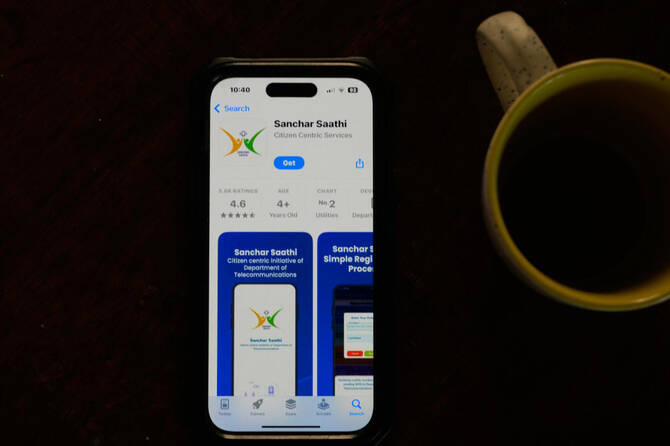
According to Reuters reports, three informed sources revealed that Apple did not intend to comply with the order of the Government of India to pre-position “Sanchar Saathi” for mobile equipment under a compulsory flag and would convey its claim to New Delhi. Sanchar Sahathi applications help users to block and track lost or stolen mobile phones in all telecommunications networks, mainly through the Central Database of India, while allowing users to identify and disconnect fraudulent mobile connections. Since its launch, the application has been downloaded over 5 million times, helping to shield over 3.7 million stolen or lost mobile phones and to terminate over 30 million fraudulent connections. The Government of India stated that it helped to prevent cyber-threats, assisted in tracking and blocking lost or stolen mobile phones, helped the police to locate equipment, and blocked counterfeits from the black market.
