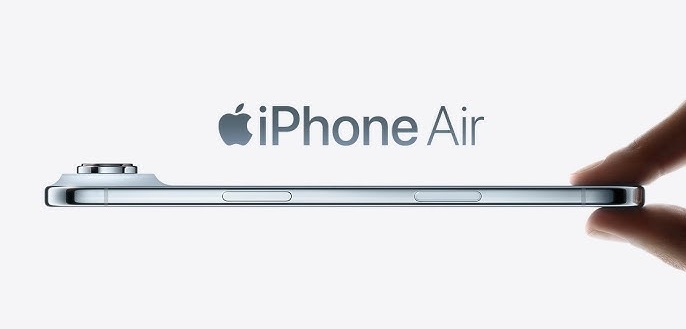
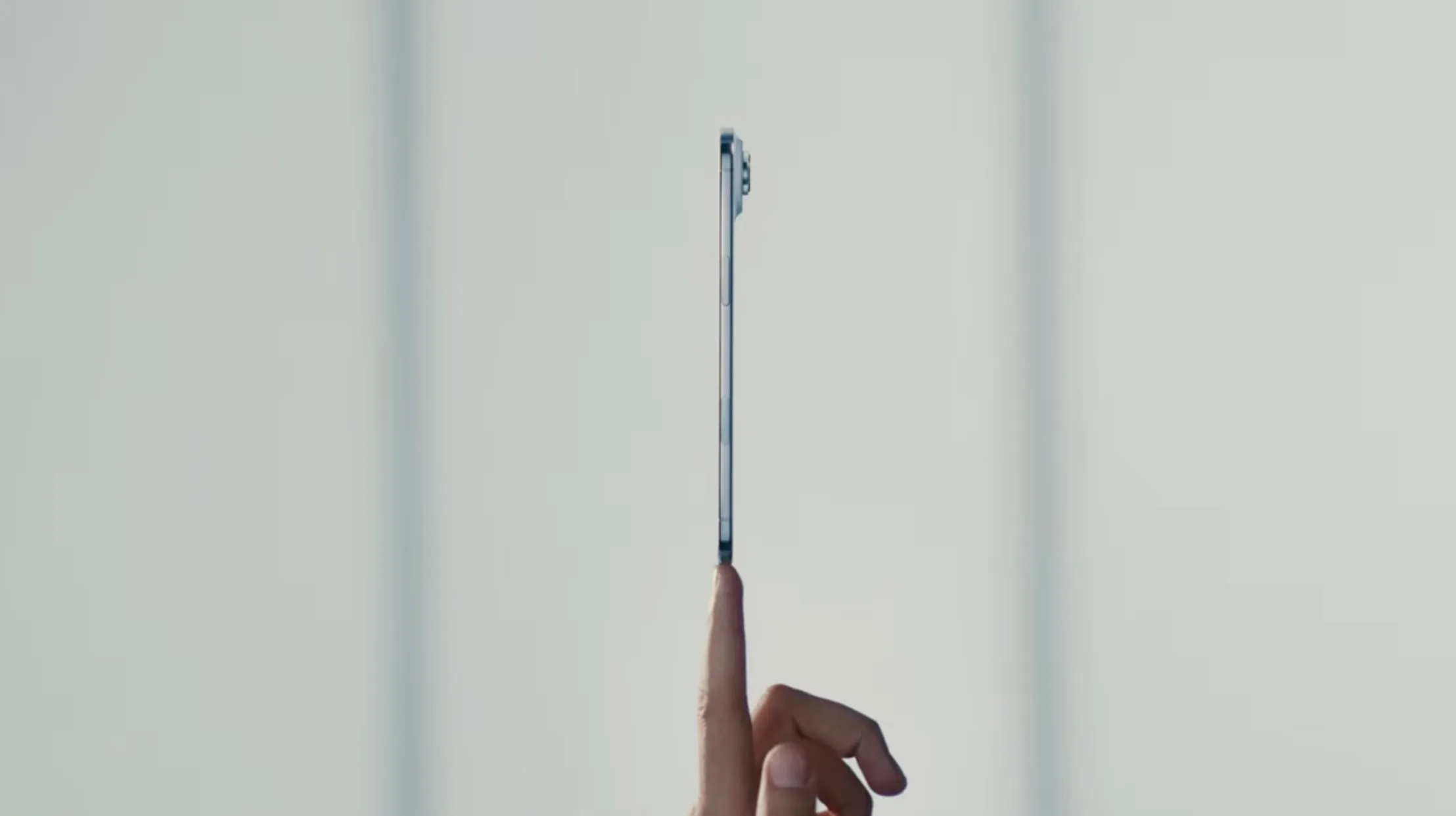
The new iPhone Air is smooth and light, but users may not want to choose this mobile phone for daily use.
The new equipment announced on Tuesday at Apple ‘ s hardware activity is thinner and lighter than the other models, 5.6 mm and the screen is 6.5 inches. At present, however, capacity in some areas is also less than the basic iPhone 17, which may deter potential buyers.
For example, ultra thin batteries continued for up to 27 hours, while iPhone 17 lasted 30 hours. It also lacks an iPhone 17 hypervelocity camera and does not support macro photography. At the same time, the price of Air at $999 is 22 per cent higher than the base model of iPhone 17, which starts with $799. You can upgrade to iPhone 17 Pro ($1099) for another $100.
Despite these shortcomings, Air is somewhat attractive: It implies the direction of iPhone hardware design, including new forms, such as folding.
Over the years, apples have been chasing thinner iPhone, not just because it can make something that looks better. Apples need to be experimented on a platform that uses its own technology to improve hardware design and mobile phone performance.
As Apple explains, iPhone Air has the largest number of design chips in iPhone, including A19 Pro (CPU with 5 nuclear GPU), N1 (wireless network chip) and the new C1X (beecom modem). Apple indicated that the latter was faster than modem in 16 Pro, but energy efficiency had increased by 30 per cent. Through the design of mobile phones around their own silicon originals, apples can address challenges such as performance and battery lifetime, which remains important as mobile phone photography, cameras and even AI progress.
In particular, the lifetime of batteries is the most painful point of functional progress for these devices, as battery technology is slower than other iPhone components and technologies. Unfortunately, the first photo version of iPhone Air did not make it any better in this respect, as its battery life was worse than other models.
Instead, Air should be seen as a starting point for iPhone design, which could help companies better understand how to optimize battery life for their other equipment.
At the same time, apples suggest that consumers use MAGAFE batteries attached to cell phone covers to maximize battery life. Apples indicate that when batteries remain connected, Air will have a longer battery lifetime.
All the elements of the Air presentation indicate that efficiency is a key focus. The term was quoted six times in the Apple news release. For example, as Apple points out, iPhone Air is the most “efficient” iPhone manufactured by the company. It continues to point out the reasons for this: the new modem, the new new method of maximizing the battery space with a new camera, the redesigned internal system structure, the self-adapted power model options in Apple iOS 26 and other optimizations.
Learning from Air and its future trajectories will eventually be rehearsed in the iPhone series of apples, and can even pave the way for new designs, such as the rumoured remixable iPhone.
Air has influenced the design choices in Apple’s iPhone Pro.
For the first time, apples used a two-clinic backboard in iPhone Air, a design choice for iPhone 17 Pro. Air’s horizontal camera “Bar” similar to Google’s Pixel seems to have inspired the camera layout of iPhone 17 Pro.
Over time, Air may even become the basic model of apples, while the Pro version remains an upgraded version of high-suspension pursuers and professionals. This will allow space for new equipment (e.g., foldable or any other equipment).
