
On 21 January, the Supreme Court of India will form a bench of three judges, headed by Chief Justice Surya Kant, to focus on constitutional compliance challenges in relation to the Promotion and Regulation of Online Games Act 2025 (PROGA). This hearing will determine the course of life and death in the online game industry in India — a sector that has been in the grip of mass stagnating and transformational pains since the PROGA completely banned the gold game last year.

PROGA regulatory objectives On August 22, 2025, Indian Prime Minister Modi approved PROGA, which sets out its objective to promote innovation in electronic games and online social games while curbing harmful gold games. However, the Act imposes a one-size-fits-all ban on all forms of genuine gold games without distinguishing between skill and luck-type games. In its petition, the business and industry organizations involved stated that the provisions of the PROGA Act prohibiting all online gold games exceeded the legislative authority of the central Government and violated the areas of jurisdiction of the states over “roaring” matters. In contrast, the Government of India maintains that Parliament has the legislative power to regulate online games in a comprehensive manner, emphasizing that “unregulated brutal growth has caused socio-economic harm”. Industry transformation and capital withdrawal The impact of PROGA has affected the entire industry. Following the closure of Jungle Game’s real money business, Flutter Entertainment began to reshape its Indian strategy. The company is redeploying its staff, exploring cashless game models in India and assessing international markets that allow real money games. Flutter recorded impairment losses of $556 million related to Junglee ‘ s closure, resulting in a net loss of $789 million in the third quarter of 2025.

Nazara Technologies, India ‘ s only listed game company, reported a combined net loss of Rs. 2,935 million in the second quarter of the 2025-26 fiscal year. The loss resulted from the impairment of Rs. 91.47 billion of its investment in Moonshine Technologies, which was affected by the real money game ban. Other major operators, including Dream11, Mobile Premier League, Gameskraft, Zupee and Gomes 24×7, have also suspended money games. Opinion exchange platforms such as Probo and MPL Opinio were also closed down. More than 90 per cent of the income of Dream Sports is currently from Dream11 and is now dependent on other operations such as FanCode, DreamSetGo and its game development studio. The proliferation of offshore operators has raised new concerns. The CUTS International survey, a policy research institute, showed that the proportion of users using offshore betting platforms after the ban had increased from 68.3 per cent to 82 per cent. The corporate legal adviser, Divya Sharma, explained that migration to offshore platforms posed significant legal and enforcement challenges. As offshore websites operate outside Indian law, it is difficult for regulators to implement India’s “know your customer” and anti-money laundering requirements. He pointed out that “out-of-country platforms circumvent India’s KYC/AML norms through technologies such as virtual networks and are extremely difficult to enforce under existing laws”. This exposes the possibility that the ban may push users towards more unprotected grey areas.
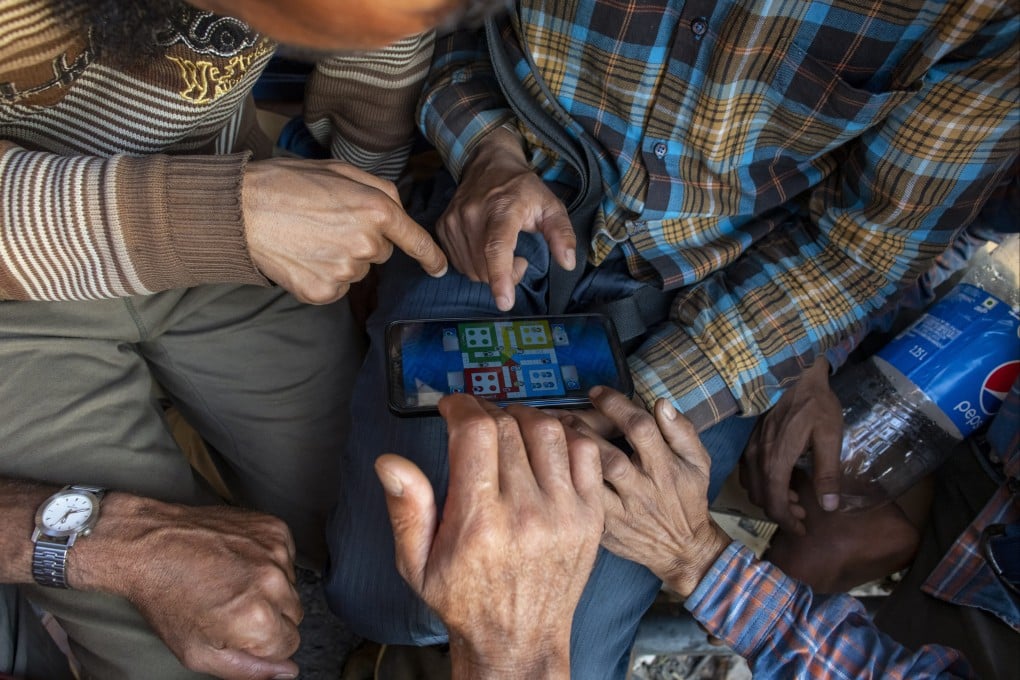
According to Satyajit Chakraborty, an independent game developer in India, Flying Robot Studios, Proga rightly gave priority to public welfare, responsible play, and the growth of electronic and social games. “However, instead of completely banning, a phased regulatory framework with potential for consumer protection could have given companies time to diversify and adapt.” “That said, I believe that this is a step in the right direction for the Indian video game industry. For a long time, the focus was on the wrong place, and the gold game was never a game, a gamble. Investors should have recognized the fragility of this model based on fragile, dirty money, and real and sustainable growth comes from creativity and technological innovation, not industries that can be banned overnight.” The survey covered 1,000 former gold game users in the capital, Delhi, India, and tracked the conduct of the ban before and after 1 October 2025. The survey found that in the absence of permitted domestic alternatives, there was a clear shift from players to unregulated offshore platforms.
